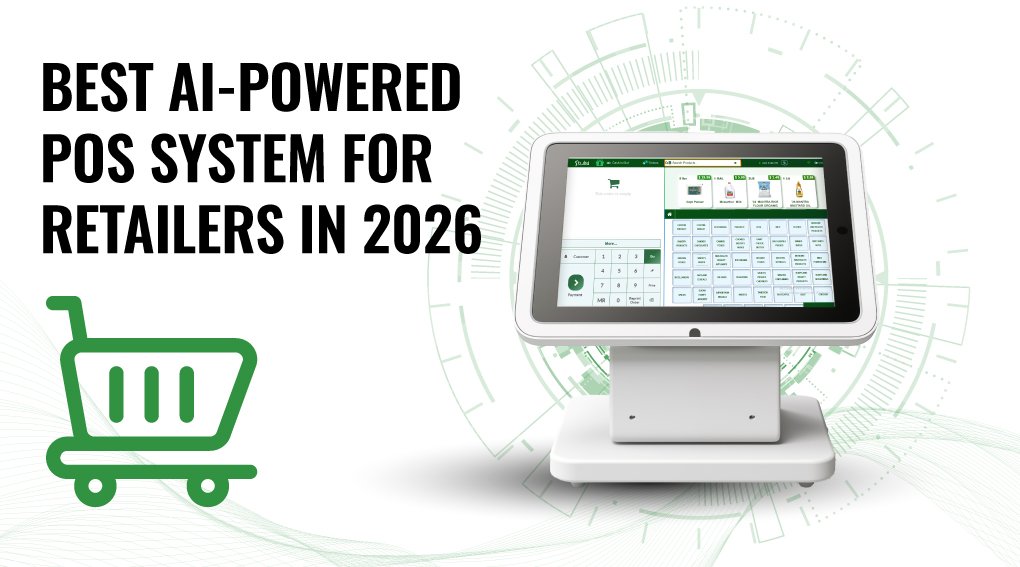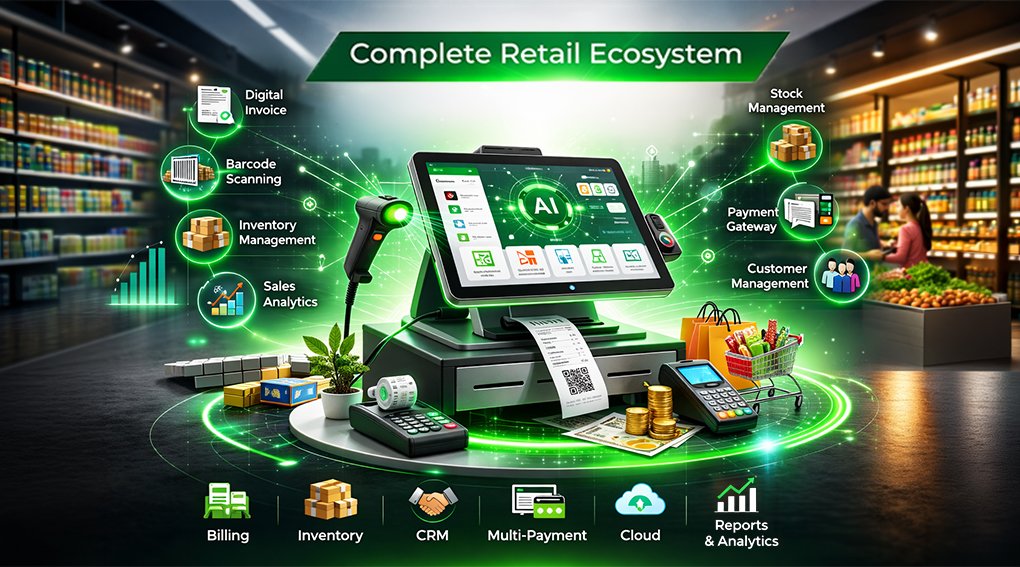

For grocery and retail stores, tulsi POS is a smarter choice than a traditional POS system because it goes beyond basic billing. While traditional POS systems mainly help process sales, tulsi POS supports faster billing, real-time inventory updates, customer management, promotions, discounts, reports, loyalty programs, shelf label printing, and AI-powered retail insights.
For modern grocery stores, supermarkets, convenience stores, and retail shops, a POS system should not only generate bills. It should help the business owner control stock, reduce errors, improve customer experience, manage offers, and make better decisions using data. That is where tulsi POS becomes a more future-ready solution.
Why POS Software Matters for Grocery and Retail Stores
Running a grocery or retail store is fast-paced. Every day, store owners handle billing, stock updates, price changes, customer requests, discounts, supplier purchases, returns, and staff activity. Grocery businesses also deal with high sales volume and perishable inventory, which makes inventory control especially important. Industry POS buyers’ guides commonly highlight inventory management, POS, payroll, and customer relationship management as major areas for grocery stores.
A traditional POS may be enough for very basic billing, but today’s retail environment needs more. Customers expect quick checkout, accurate pricing, digital receipts, loyalty rewards, and product availability. Store owners need to know what is selling, what is slow-moving, what is out of stock, and where profit is coming from.This is why many grocery and retail businesses are moving from traditional POS systems to smarter retail POS software like tulsi POS.
What Is a Traditional POS System?
A traditional POS system is usually designed to complete basic sales transactions. It may include a billing counter, cash drawer, barcode scanner, receipt printer, and simple sales software. Its main purpose is to process purchases and print receipts.
For small stores, this can work in the beginning. However, as the business grows, a traditional POS system often becomes limited. Store owners may still need to manage stock manually, check reports separately, update product prices one by one, and depend heavily on staff for daily accuracy.
What Is tulsi POS?
tulsi POS is a smart POS solution designed for retail and grocery stores. According to tulsi POS, its system combines billing, inventory, promotions, and customer data with AI-driven insights to help retailers reduce stock issues, stay in control, and increase sales without complexity.
tulsi POS is built for fast-moving retail environments where billing speed, inventory accuracy, customer retention, and smart reporting matter. It includes important features such as controlled user access, instant printing, reports and analytics, promotions and discounts, and real-time data updates.
In simple words, tulsi POS is not just a billing machine. It is a complete retail POS system that helps store owners manage daily operations more efficiently.
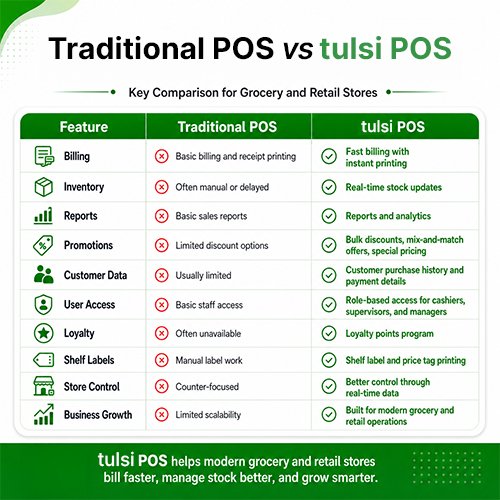
Traditional POS vs tulsi POS: Key Comparison
Faster Billing and Better Checkout Experience
In grocery and retail stores, speed matters. Long queues can frustrate customers and reduce repeat visits. A traditional POS may process bills, but it may not always support fast item lookup, efficient promotions, customer tracking, and smooth checkout workflows.
tulsi POS is designed for speed at the counter. Its official POS page states that the interface is built so cashiers can process sales quickly with minimal training.
This is especially useful for grocery stores during peak hours, weekends, festive seasons, and evening rush. Faster billing means shorter queues, happier customers, and more sales completed in less time.
Real-Time Inventory Updates
Inventory is one of the biggest challenges for grocery and retail businesses. A traditional POS may record sales, but stock updates may not always be automatic or accurate. This creates mismatches between actual stock and system stock.
tulsi POS supports real-time inventory syncing. tulsi’s FAQ states that stock automatically updates with every invoice or sale, helping improve accuracy and reduce inventory mismatches.
For grocery stores, this is very important because products move quickly. Store owners need to know which items are available, which items are running low, and which products need reordering.
With real-time inventory, retailers can reduce stockouts, avoid overstocking, track fast-moving items, and make smarter purchase decisions.
Smarter Promotions and Discounts
Discounts are a major part of grocery and retail sales. Stores run offers like “buy one get one,” bulk discounts, seasonal offers, festival pricing, loyalty discounts, and mix-and-match promotions.
Traditional POS systems may require manual discount entry, which can slow down billing and increase errors. tulsi POS supports promotional sales, bulk discounts, mix-and-match offers, and special pricing to help retailers increase basket size.
This makes tulsi POS useful for grocery stores, supermarkets, convenience stores, liquor stores where legal, fashion stores, general retail stores, and multi-category shops.
Better promotion management helps stores attract customers, increase average order value, clear slow-moving stock, and improve customer satisfaction.
Customer Management and Purchase History
A traditional POS often treats every customer as a one-time buyer. But modern retail is different. Customer retention is one of the easiest ways to grow store revenue.
tulsi POS helps store owners keep customer purchase history and payment details in one place.
This allows retailers to understand buying habits, identify loyal customers, create personalized offers, manage customer accounts, and improve repeat purchases.
For example, a grocery store owner can see which customers buy frequently, what products they prefer, and how often they visit. This data can help create better offers and stronger customer relationships.
Loyalty Points for Repeat Customers
Customer loyalty programs are powerful for grocery and retail stores. When customers earn points, rewards, or benefits, they are more likely to return.
Traditional POS systems may not include built-in loyalty features. tulsi POS includes a loyalty points program that helps reward repeat customers and encourage frequent visits.
This is valuable because grocery shopping is repetitive. Customers often buy milk, bread, snacks, household items, produce, and daily essentials from the same store. A loyalty program can help turn occasional buyers into regular customers.
Better Reports and Analytics
A traditional POS may show daily sales, but that is not enough for growth. Store owners need answers to deeper questions:
Which products sell the most?
Which items are slow-moving?
Which category gives better margins?
Which cashier handled the most transactions?
Which promotion worked best?
What should be reordered this week?
tulsi POS includes reports and analytics, helping retailers move from guesswork to data-based decisions.
For grocery and retail stores, reports can help improve inventory planning, pricing strategy, staff performance, profit margins, and purchasing decisions.
Role-Based Access Control for Staff
In retail stores, not every employee should have access to every function. Cashiers may only need billing access. Supervisors may need discount approval. Managers may need reports, pricing, inventory, and user permissions.
tulsi POS offers role-based access control for cashiers, supervisors, and managers.
This helps improve security and accountability. Store owners can reduce unauthorized discounts, prevent unnecessary changes, and keep better control over daily operations
Shelf Label and Price Tag Printing
Price accuracy is very important in grocery and retail stores. If shelf prices do not match billing prices, customers may complain. Manual label printing can also take time and create mistakes.
tulsi POS supports shelf label and price tag printing with correct pricing and product information.
This feature is useful when stores update prices, launch offers, add new products, or manage large inventories. It helps maintain consistency between shelf pricing and POS billing.
AI-Powered Inventory and Smarter Retail Decisions
One of the biggest advantages of tulsi POS is its AI-powered approach. tulsi’s AI inventory content explains that tulsi AI POS supports real-time inventory tracking, demand forecasting, reorder alerts, smart inventory insights, and cloud-based access.
This is where tulsi POS becomes more advanced than a traditional POS system.
With AI-powered insights, grocery and retail stores can identify high-demand products, prepare for seasonal trends, avoid stockouts, reduce overstocking, detect slow-moving items, and improve profit margins.
Instead of relying only on staff memory or manual checking, store owners can use data to make faster and better business decisions.
Why tulsi POS Is the Smarter Choice for Grocery Stores
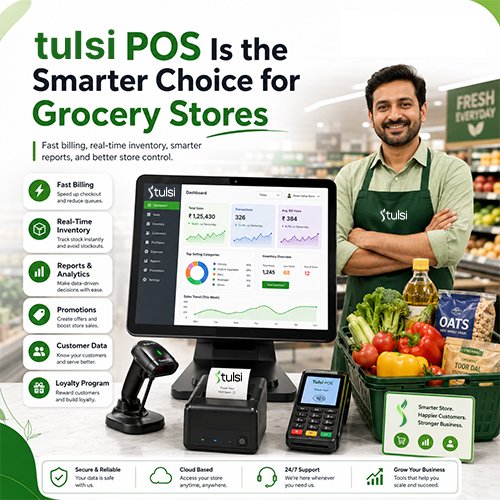
Grocery stores need more than billing. They need real-time stock control, fast checkout, accurate pricing, discount management, expiry awareness, customer loyalty, and reports.
tulsi POS fits these needs because it helps grocery store owners manage sales, inventory, customer data, promotions, and reports from one system. Its real-time updates and AI-driven features make it more useful for modern grocery operations than a basic traditional POS.
For grocery stores with high product movement, tulsi POS can help reduce manual work, improve billing accuracy, minimize stock mismatches, and support smarter reordering.
Why tulsi POS Is the Smarter Choice for Retail Stores
Retail stores also need better control over pricing, staff, offers, customer relationships, and inventory. Whether the store sells groceries, convenience items, household goods, fashion products, specialty products, or general merchandise, a smart POS system can improve daily operations.
tulsi POS helps retail stores handle checkout, customer data, promotions, user access, loyalty, price tags, and analytics in a more organized way.
Compared to a traditional POS, tulsi POS gives store owners more visibility and control.
FAQs
1. What is the difference between Traditional POS and tulsi POS?
A traditional POS mainly focuses on billing and receipt printing. tulsi POS offers a smarter system with billing, inventory management, promotions, customer data, reports, loyalty points, role-based access, and real-time updates.
2. Is tulsi POS good for grocery stores?
Yes. tulsi POS is designed for fast-moving retail and grocery stores. It helps with quick billing, inventory updates, discounts, customer management, reports, and smarter stock control.
3. Does tulsi POS update inventory automatically?
Yes. tulsi POS states that stock automatically updates with every invoice or sale, helping reduce inventory mismatches and improve stock accuracy.
4. Can tulsi POS manage promotions and discounts?
Yes. tulsi POS supports promotions such as bulk discounts, mix-and-match offers, special sales, and special pricing.
5. Why should retail stores upgrade from traditional POS to tulsi POS?
Retail stores should upgrade because tulsi POS provides more than billing. It helps manage inventory, customers, staff access, discounts, loyalty, reports, and AI-based insights, making daily operations easier and more accurate.
6. Is tulsi POS useful for small retail stores?
Yes. tulsi POS can help small retail stores improve billing speed, reduce manual errors, manage stock, and understand customer purchase behavior.
7. What type of businesses can use tulsi POS?
tulsi POS is suitable for grocery stores, supermarkets, convenience stores, retail shops, general stores, and fast-moving retail businesses.